1. Design for the experiences, not a season label
A route can look elegant on a map while passing through places that want very different planning assumptions. A coast, an inland city and a mountain excursion may share a travel date without sharing conditions. Start by naming the experiences that justify each stop. If a destination is mainly a transfer point, say so; if it exists for one outdoor highlight, make that dependence explicit.
Then ask what the season needs to support. Comfortable city walking, a mountain outing and a road journey have different limits. A broad description such as summer, dry season or shoulder season is only a starting point. It cannot establish whether the particular activity is safe, operating or enjoyable. A good seasonal route is built from compatible experiences and verified access, not from a list of places that all happen to sound appealing in the same month.
2. Build a stop-by-stop seasonal worksheet
For each stop, record the intended dates, main activity, historical temperature and rain context, and any separate access check. Use the same type of historical evidence when comparing destinations where possible. The site's city climate summary uses roughly three recent years; other tools use different periods, and some monthly rankings show only a particular year's completed month. Read those labels before drawing a route-wide conclusion.
Do not describe these short summaries as standard climate normals. They are recent historical context, and the archive service behind them uses reanalysis rather than a direct measurement at every attraction. This is especially important when a city page stands in for a nearby mountain or coastline. Add the excursion location to your research rather than assuming the urban summary covers it. The worksheet should reveal gaps in your knowledge, not conceal them behind a polished route line.
3. Separate hemisphere, regional season and local exposure
Calendar months do not carry the same seasonal meaning everywhere. Cape Town Tourism describes hot, dry summers from November to March, a useful reminder that a northern-hemisphere winter holiday can fall in a very different seasonal setting. Even there, the general pattern does not establish conditions on Table Mountain or guarantee a wind-free outing. Regional context helps select the window; local exposure determines what must be checked next.
Tokyo provides another example of why labels need detail. Its official tourism guide discusses rainy-season and typhoon-season context alongside indoor alternatives. That is more informative than assuming all summer dates support the same style of travel. Treat broad seasonal guidance as a warning about the questions to ask, not as a deterministic calendar. Your route may remain worthwhile in an unsettled period if its activities and transfer structure can absorb that uncertainty.
4. Compare stops by what can make them fail
Not all route mismatches are equally important. Rain during an indoor cultural stop may change the walk between venues but leave the main purpose intact. A closed seasonal road can remove a destination entirely. Rank each stop by the consequence of unsuitable conditions, then give the most fragile stop the strongest seasonal support and the best recovery opportunity.
The table compares verified kinds of experiences, not current weather or operating guarantees. It helps identify which authority or provider should supply the next piece of evidence. If the route depends on an answer you have not verified, keep that leg provisional rather than assuming that an attractive average settles it.
| Stop or experience | Seasonal issue to investigate | Evidence needed beyond a city chart | Route response |
|---|---|---|---|
| Cape Town mountain outing | Wind, visibility, heat and rapid changes | Local weather, safety advice and operator status | Keep more than one suitable opportunity |
| Iceland highland road leg | Limited seasonal opening and route suitability | Official road information and vehicle requirements | Use a verified seasonal route or omit the leg |
| Tokyo culture and walking | Rainy periods and severe-weather disruption | Dated forecast, warnings and venue access | Combine indoor anchors with movable walks |
| Lisbon neighborhood exploration | Heat, wet footing and steep terrain | Local forecast and realistic walking plan | Shorten or exchange outdoor periods |
| Rome museum-centered stop | Exposure during transfers and queues | Opening, tickets and local conditions | Protect entry times while varying surrounding walks |
5. Change the order only when it produces a real benefit
Reversing a route can sometimes align an activity with a more suitable seasonal window, particularly over a longer journey. But a few days' difference is not a magic weather improvement. A local weather system can outweigh the gradual seasonal change between the first and second week. Do not accept extra backtracking or difficult transfers merely because one order appears fractionally better in a rounded historical chart.
Compare route orders against both weather and logistics. Can the sensitive stop gain another possible outing day? Does the change avoid a known operating limit? Is the transport actually available in the new sequence? If the weather benefit is speculative and the logistical cost is certain, keep the simpler order. Seasonal design should remove obvious mismatches, not encourage elaborate optimization beyond what the evidence can support.
6. Verify daylight, roads and seasonal operations separately
Temperature and rain are only part of seasonal feasibility. Daylight affects how much outdoor travel can fit comfortably, especially when a route includes unfamiliar roads or a long return from an excursion. Verify daylight for the actual dates instead of assuming a summer-style schedule works throughout the year. Confirm operator calendars and transport services as well; a place being open to visitors does not mean every desired excursion runs daily.
Iceland's official driving guidance makes the access distinction concrete. Highland F-roads are open only for a limited summer period and require appropriate vehicles and preparation; other roads can also be affected by weather. A mapped connection is therefore not sufficient evidence that a leg belongs on your route. Check current official information close to travel, respect closures and avoid treating a larger time allowance as a substitute for safe access.
7. Worked example: a Lisbon–Rome route centered on walking and culture
Suppose you have a flexible seasonal window and want two city stops: Lisbon for neighborhood exploration and Rome for cultural visits. Compare the same candidate months for both places, recording the historical period behind each view. Give extra weight to walking comfort in Lisbon because Alfama's steep cobbled streets are a major part of the plan. Give Rome a substantial indoor anchor through the Capitoline Museums, documented by its tourism authority.
A workable sequence might use three nights in Lisbon, a dedicated transfer day and four nights in Rome, subject to verified transport. Keep Lisbon's first full day provisionally for the longer walk and the next as another possible window. In Rome, secure the museum arrangement and leave surrounding outdoor exploration adjustable. The final morning is departure, not a spare weather day.
Putting the example into practice
If one candidate month looks comfortable in both cities, it is a stronger starting point than choosing each city's isolated top-ranked month and pretending they coincide. If the historical difference is small, let transport, access and personal availability decide. This is seasonal compatibility, not a claim that either city will produce specific conditions.
8. Treat a mountain-focused stop as a separate planning problem
A city-and-mountain combination needs more than one weather assumption. Cape Town Tourism warns that Table Mountain conditions can change quickly, with wind, mist, rain and heat among the concerns. Its safety guidance recommends checking conditions before setting out. A favorable city season is therefore not permission to treat the mountain as an automatic add-on after breakfast.
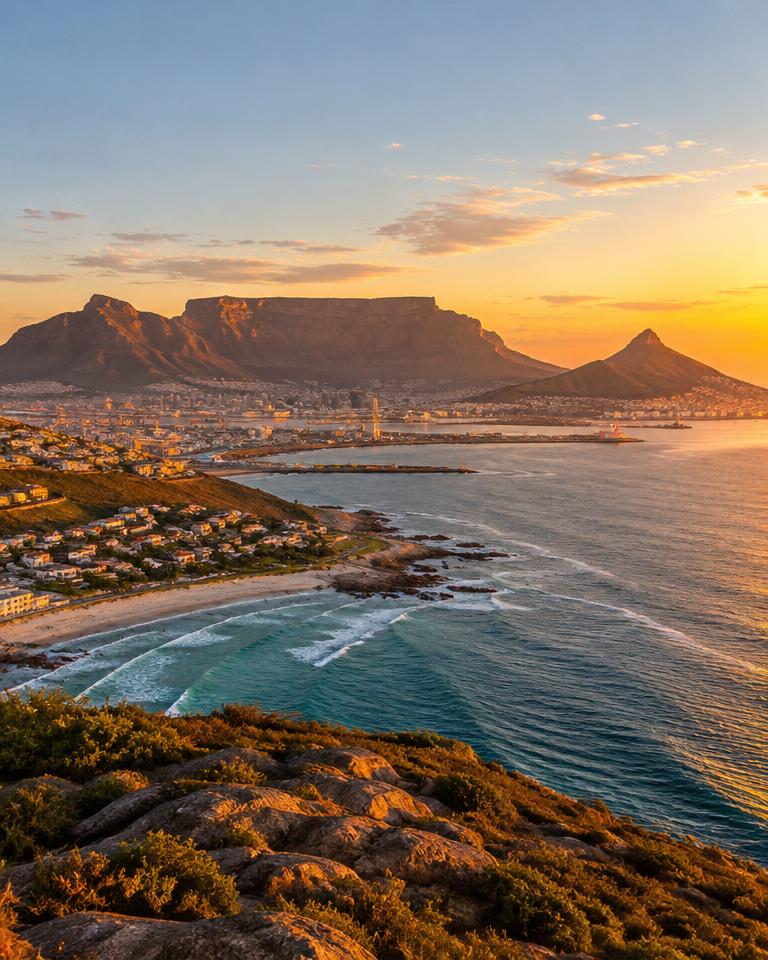
If the mountain experience is central, give it several possible opportunities and follow current local advice, including guidance on groups and appropriate preparation. If it is optional, make omission an accepted outcome rather than reshaping the whole route around a narrow forecast window. The Cape Town illustration is destination context only; it is not a depiction of expected visibility or evidence that a particular hiking route is suitable. Apply this separation whenever an urban base supports an excursion into a more exposed environment.
9. Test the route against an ordinary disruption
Before booking, imagine that one exposed activity is canceled and one transfer takes longer than planned. Can the route still meet its main purpose? If not, identify whether it needs fewer stops, another night in the right place or a different season. Adding spare time indiscriminately is less useful than protecting the leg whose failure would affect everything after it.
Then run the checklist for every stop. A blank item is not automatically a reason to cancel, but it is a reason to withhold confidence until the relevant information is checked. For Iceland, official tourism guidance points visitors toward current safety and travel conditions; use the equivalent authoritative sources wherever your route goes.
Before you go
- Name the main experience and its weather sensitivity at each stop.
- Record the historical period and year labels used in comparisons.
- Check excursion locations separately from city summaries.
- Verify daylight and seasonal access for the actual dates.
- Confirm transport and operator schedules with providers.
- Place recovery time beside fragile activities or connections.
- Agree which optional stop or outing can be dropped.
10. Keep seasonal design and daily operation distinct
Once the route is selected, use the seasonal research as the framework rather than repeatedly rebuilding the journey around every forecast update. As each stop enters the forecast window, arrange its movable activities using the actual dated information. Later stops may still need historical context until their dates are close enough. Keep that difference explicit instead of treating a current forecast for the first destination as a route-wide prediction.
On the day, official warnings, closures and operator decisions take priority over the original seasonal expectation. Adjust at the smallest effective scale when possible—a shorter walk, a museum-led afternoon or a different excursion day—but accept larger changes when access or safety requires them. A strong seasonal route creates several reasonable ways for the trip to work. It does not depend on every stop delivering its most favorable historical version at exactly the moment you arrive.
Frequently asked questions
Can I use one country's best season for every stop?
No. Coasts, inland areas, elevations and distant regions can differ. Check each destination and the actual excursion locations instead of applying one country-wide label.
Will reversing a route always improve the weather?
No. A short change in order may have little effect, and individual weather systems can outweigh gradual seasonal differences. Reverse only when historical context and practical access support a meaningful benefit.
What matters besides temperature and rain?
Daylight, wind, visibility, seasonal roads, operator schedules and activity-specific hazards can all affect the route. Confirm these with official authorities or providers rather than inferring them from a monthly score.
When should I finalize the daily order?
Set the route framework once seasonal suitability and access are verified. Refine movable activities when your dates enter the forecast window, and check official notices again before exposed outings.