1. Choose the region before choosing the season
The best time to visit Japan depends on latitude, elevation and what you want to do. A Tokyo–Osaka sightseeing trip, a northern outdoor holiday and an island stay in Okinawa should not share one weather assumption. Begin with your essential experiences, then choose a region and seasonal window that support them. Add other stops only after checking whether their needs are compatible.
JNTO emphasizes that Japan stretches from northern Hokkaido to subtropical Okinawa and that conditions vary greatly between regions. Its national-park guidance also distinguishes mountainous areas and the Sea of Japan side from other parts of the country. Those differences explain why a general four-season description is useful orientation but insufficient for booking a complex route. Research the actual destinations, not an imagined national average.
2. Use Tokyo and Osaka as city-specific anchors
Compare the site's Tokyo best-time page and Osaka best-time page when planning a route through those cities. Read temperature and rainfall together, then compare neighboring months against your own comfort preferences. A traveller who enjoys warm evenings may choose differently from someone expecting long, brisk walking days.
Do not use either city as a substitute for Hokkaido, Okinawa or a mountain destination. Even a day trip can involve different exposure and access constraints. Months ahead, the historical pages help identify a plausible window. Near departure, switch to Tokyo's dated forecast and Osaka's dated forecast, then add official local information for each excursion. Keep the sources' different purposes clear.
3. Spring: plan for a trip, not only a blossom date
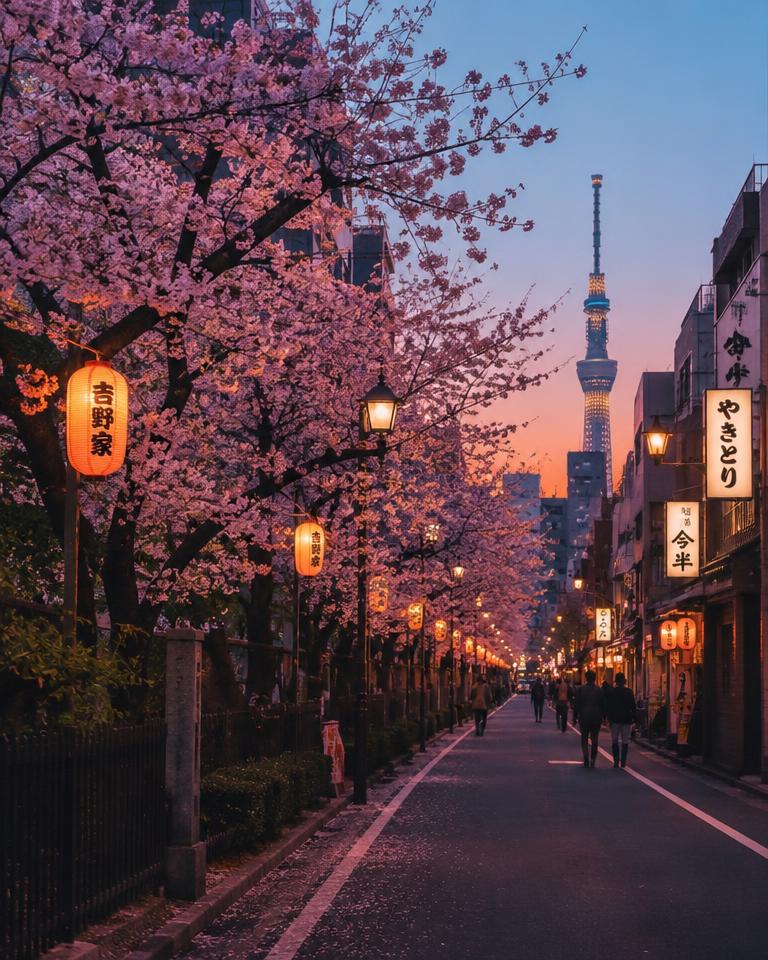
Spring is an attractive period to compare for city sightseeing and many outdoor experiences, but cherry blossoms should be treated as a variable seasonal event. JNTO describes a blossom progression that moves geographically across the country, rather than one simultaneous national display. The exact experience depends on location and the year's conditions, so a fixed booking cannot guarantee the stage you hope to see.
Build an itinerary you would still enjoy if flowering arrives earlier or later. Choose neighborhoods, museums, food experiences and parks for their broader appeal. Carry layers for cooler mornings and evenings, and avoid assuming that spring city conditions mean every mountain route is open. If blossoms are the main objective, retain some geographic flexibility and consult current official information closer to travel rather than relying only on last year's dates.
4. Rainy periods: protect the shape of the itinerary
Rainy-season timing and intensity are regional questions, not a single switch that turns the whole country wet at once. JNTO's seasonal guidance describes rainy periods alongside substantial geographic differences. For a city-focused trip, the practical response is to reduce dependence on uninterrupted outdoor days and keep substantial indoor activities available. Do not interpret a seasonal label as a forecast of constant rain.
Group activities geographically so a shower does not trigger a long cross-city journey. Keep a rain layer accessible, protect electronics and allow time for wet footwear to dry. For hiking, riverside activities or rural transfers, go beyond an urban backup plan and check current local conditions. Persistent or intense rain can make an activity unsuitable rather than merely less photogenic.
5. Summer: distinguish city heat from northern and upland options
JNTO describes generally hot, humid summers, with some relief available in northern regions and mountainous areas. That does not make every northern or upland activity automatically suitable, but it provides a reason to compare routes rather than forcing an intensive city-walking schedule into dates you find uncomfortable. Your tolerance for heat should shape the itinerary as much as your list of sights.
For Tokyo or Osaka, break outdoor sightseeing into manageable blocks and keep longer indoor stops in the plan. Carry sun protection and drinking water, and check current heat advice. If you add a mountain excursion, research that route separately, including access and equipment. Moving upward is not a universal shortcut to easy conditions: exposure, storms and terrain can create different risks from the city heat you are trying to avoid.
6. Autumn and winter: separate scenery, storms and snow
Autumn is another useful period to compare for sightseeing and outdoor travel, but foliage timing varies by location and elevation. Do not assume one nationwide peak date. JNTO's typhoon guidance notes that tropical systems can affect Japan and disrupt transport, with particular relevance to southern areas but no guarantee that major cities remain unaffected. Review current official warnings rather than treating a seasonal comfort ranking as operational reassurance.
Winter can suit a city-focused trip or a snow-centered holiday, but these are different products. JNTO identifies heavier snow with Hokkaido, mountain areas and regions near the Sea of Japan. A clear city morning does not establish conditions on a snowy route. Confirm transport, equipment and access for the destination itself, and keep extra flexibility around transfers that matter to an international departure.
7. Compare seasonal opportunities and constraints
The table below summarizes the regional approach described in JNTO's seasons and climate guidance. It is a planning comparison, not a forecast or a set of guaranteed event dates.
If your priorities compete, decide which one matters most. A route designed around snow, blossoms and subtropical island time may require more compromises and travel than its variety initially suggests. A simpler trip with a clear seasonal purpose leaves more opportunity to adapt and enjoy ordinary days rather than continually pursuing a narrow weather or flowering window.
| Season or objective | Potential appeal | Main check before committing |
|---|---|---|
| Spring city sightseeing | Parks, walking and possible seasonal flowers | Current flowering information and variable temperatures |
| Rainy-period city trip | Indoor culture with flexible outdoor windows | Local rainfall outlook and disruption notices |
| Summer urban travel | A route built around manageable outdoor blocks | Heat advice and realistic walking expectations |
| Northern or upland summer trip | An alternative to hotter lowland cities | Destination-specific weather and access |
| Autumn sightseeing | Walking and possible seasonal color | Local foliage progression and storm information |
| Winter snow holiday | Snow-focused activities in appropriate regions | Transport, equipment and current operating conditions |
8. Worked example: Tokyo and Osaka with one flexible excursion
Start with several nights in Tokyo, a transfer day and several nights in Osaka. Compare both cities' historical pages for the same candidate dates, then choose the window that best matches your comfort preferences. Do not make the transfer day carry a major timed admission at both ends. Give each base a mix of neighborhood walking and indoor priorities.
Putting the example into practice
Add one weather-sensitive excursion from either base, with a clear alternative in the city. Keep its date movable until you have a useful forecast and confirmed operating information. If the excursion requires mountain access, assess that independently. Check actual train services and booking arrangements through the relevant official operator; this example describes a resilient route structure, not a ticket recommendation or a guarantee of journey times.
9. Preserve flexibility where weather can disrupt the route
Book the genuinely constrained parts first: international transport, accommodation where availability matters and attractions with specific admission requirements. Check change terms for weather-dependent activities. Avoid a chain of tightly timed connections before your flight home, particularly when the route includes islands, exposed rail sections or destinations affected by current warnings. A spare night in the departure city can be more valuable than another distant stop.
Pack layers that fit together, footwear suited to substantial walking and rain protection that remains easy to reach. For outdoor activities, follow local equipment guidance instead of assuming a city wardrobe is sufficient. JNTO's national-park advice specifically recommends layered and waterproof clothing even during generally comfortable spring and autumn periods. The season can be favorable while the day's weather still requires preparation.
10. Update the plan as the information becomes more specific
Early planning should focus on regional climate and the experiences you want. As departure approaches, consult current event information, dated forecasts and official warnings. During the trip, check again before exposed excursions and consequential transfers. A forecast, bloom update and transport notice answer different questions, so one should not be treated as a replacement for the others.
The best time to visit Japan is the season that suits your selected region and leaves you enough flexibility to enjoy it. A trip does not fail because blossoms are past their peak or a rainy afternoon moves you indoors. It becomes fragile when every day depends on an exact event, uninterrupted transport and perfect visibility. Build a route with several reasons to be there.
Before you go
- Choose regions and essential activities before choosing dates.
- Compare Tokyo and Osaka data only for those cities.
- Research northern, southern and mountain additions separately.
- Treat blossoms and foliage as variable events.
- Plan indoor anchors for wet or very hot periods.
- Review official storm and heat information near travel.
- Confirm mountain access and seasonal operating arrangements.
- Check transport directly with the relevant operators.
- Leave a buffer before important onward travel.
Frequently asked questions
Are spring and autumn always the best seasons for Japan?
They are useful starting points for many sightseeing and outdoor trips, but region, elevation and your interests matter. High routes can remain snow-affected while cities are comfortable.
Can I guarantee cherry blossoms by choosing a fixed week?
No. Timing varies by location and year. Use seasonal information for initial planning, then current official bloom information as travel approaches, while keeping other reasons to enjoy the trip.
Should I avoid Japan during rainy periods?
Not necessarily. A city-focused route with indoor options can remain rewarding, but rain-sensitive outdoor activities and transport connections need more flexibility and closer monitoring.
Does a Tokyo forecast tell me whether a mountain hike is suitable?
No. Consult conditions and access information for the mountain itself. Elevation, snow, wind and seasonal closures can differ sharply from the city.