1. Treat these as three movable day plans
Lisbon is easier to enjoy when the itinerary works with its hills, riverfront and weather instead of fighting them. This plan groups nearby places and gives each day a clear purpose: central neighborhoods, Belém and an eastern-district option. It deliberately leaves space for meals, queues, rests and the ordinary pleasure of stopping somewhere you did not research in advance.
Check the site's Lisbon best-time page when choosing dates and the Lisbon weather page near departure. Visit Lisboa describes generally mild winters and hot summers moderated by the sea, with often mild spring and autumn days. That is seasonal context, not a forecast for your visit. Move the longer exposed walk to the most suitable available day.
2. Set up an easy arrival and realistic transport plan
Choose accommodation with the route to public transport and the slope of the final approach in mind. A place that looks central on a map can still involve an inconvenient climb with luggage. Keep arrival day light unless your journey leaves you genuinely rested. A short orientation walk, a meal and preparation for the next morning are enough to make the day useful.
Use official transport information for the actual service, payment options and disruptions on your dates. Visit Lisboa identifies the No. 15 tram as a riverfront connection toward Belém, but this is not a promise about a particular departure or the absence of diversions. Check CARRIS rather than treating a saved itinerary as a live transport app. Allow extra time before any fixed attraction booking.
3. Day 1 morning: Baixa and the central riverfront
Begin around Praça do Comércio and use the open central streets to get your bearings before tackling more demanding slopes. Walk through Baixa at an unhurried pace, pausing for breakfast or coffee rather than immediately chasing a long attraction list. The aim is to understand how the river, central squares and hillside neighborhoods connect so later decisions feel easier.
In warm weather, bring the longest open-air walking block forward and take a substantial indoor or shaded break later. In showers, shorten the riverfront portion and use a nearby indoor stop that you have checked in advance. Do not cross the city simply to escape a brief change in conditions. A compact first morning leaves enough energy for the older neighborhoods without making the whole day depend on perfect weather.
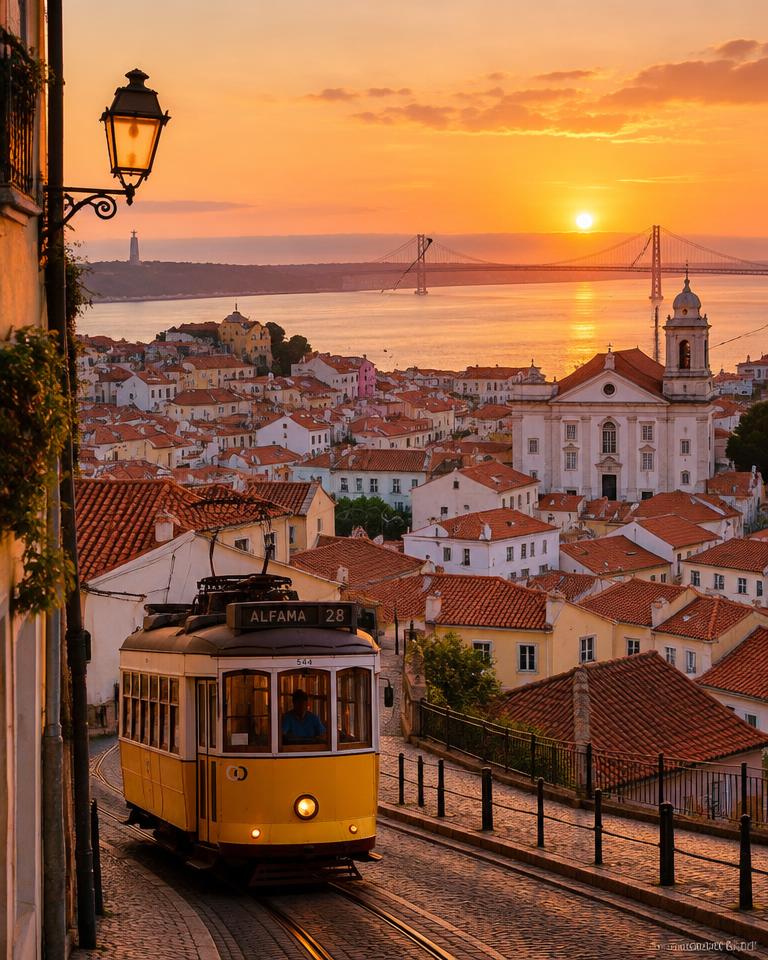
4. Day 1 afternoon: Alfama at a manageable pace
Use the afternoon for a selective exploration of Alfama rather than an attempt to cover every lane and viewpoint. Choose one uphill objective, then build the rest of the walk around your energy and conditions. A viewpoint is worthwhile when visibility and comfort cooperate; it is not an obligation in strong wind, persistent rain or draining heat.
Leave time for a seated meal and a straightforward return to your accommodation. If wet paving or limited mobility makes the hill section uncomfortable, reduce the walking and choose transport for part of the journey. Lisbon's character does not depend on completing a staircase challenge. A shorter route with several enjoyable stops is a better first day than an ambitious loop that leaves everyone exhausted.
5. Day 2: give Belém a focused day
Make Belém the main destination rather than a hurried addition between central attractions. Choose one priority admission, with Jerónimos Monastery a strong option for visitors interested in architecture and history. Visit Lisboa identifies it as a sixteenth-century monument and UNESCO World Heritage site. Check the attraction's current official entry arrangements, closure days and any restrictions before assigning your date.
Combine that anchor with lunch and a riverfront walk if conditions suit. Keep other monuments as optional additions rather than guaranteed entries. A queue is part of the day's workload, particularly when you are standing outside. If rain or heat makes the open waterfront unattractive, concentrate on the booked interior and a slower meal instead of attempting to preserve every outdoor component.
6. Day 3: Parque das Nações or a neighborhood revisit
For a substantial indoor option, plan around Oceanário de Lisboa in Parque das Nações. Its official aquarium description presents habitats associated with the Atlantic, Pacific, Indian and Southern oceans around the idea of one global ocean. Check current tickets and entry arrangements directly before travelling there. A visit can provide a coherent day anchor rather than a hurried gap-filler between showers.
If the weather and your interests favor staying central, use the third day to revisit a neighborhood, explore at a slower pace or add an attraction you deliberately omitted earlier. You do not need an excursion to make the itinerary complete. If you do choose somewhere outside Lisbon, assess that destination's forecast and transport separately, and preserve enough margin for your return or onward departure.
7. Use a simple weather-swap matrix
The table below compares itinerary choices, not meteorological guarantees. The Belém transport context comes from Visit Lisboa's No. 15 tram description, while the indoor aquarium option is documented by its operator. Always check current arrangements before making a same-day change.
Swap whole geographic blocks when possible. Moving Belém from Tuesday to Wednesday is usually more coherent than repeatedly travelling between Belém, Alfama and Parque das Nações to chase short dry intervals. Fixed bookings can limit flexibility, so decide which one or two entries matter most and leave the surrounding walking time loose. This keeps weather adaptation from turning into transport-heavy improvisation.
| Day block | When conditions suit | When conditions do not suit |
|---|---|---|
| Baixa and central riverfront | Use a longer orientation walk | Shorten exposed sections and add a checked indoor stop |
| Alfama and viewpoints | Choose a manageable hillside route | Reduce slopes and avoid making visibility the day's goal |
| Belém | Combine the main admission with waterfront walking | Prioritize the interior booking and a slower district visit |
| Parque das Nações | Pair the aquarium with an outdoor district walk | Let the aquarium remain the main activity |
| Optional excursion | Check the destination's own conditions | Stay in Lisbon rather than forcing the trip |
8. Worked example: one wet day in a three-day visit
Suppose your first full day looks comfortable for walking, the second is persistently wet and the third offers a better outdoor window. Keep Day 1 central, with Baixa followed by a selective Alfama walk. Put the aquarium-centered day second, provided entry and transport arrangements work. Move Belém to the third day, checking that the monastery is open and that your booking can follow the change.
Putting the example into practice
If the monastery booking cannot move, keep it and trim the exposed waterfront instead. The point is not to reorder everything at any cost. A successful weather adjustment protects the most enjoyable parts of the visit while respecting existing commitments. Keep meals, travel and rest visible in the plan so an apparently clever swap does not produce an unrealistic sequence of back-to-back appointments.
9. Plan for hills, queues and different travel needs
Wear footwear you already trust on long walks and carry a layer appropriate to the forecast. A rain shell can be useful when an umbrella is awkward, while sun protection and drinking water deserve attention on exposed days. Keep your day bag modest enough that stairs and standing do not become unnecessarily tiring. Check the weather before leaving accommodation, not only before flying to Portugal.
Travellers with limited mobility, young children or a low tolerance for long standing should adapt the route more substantially than merely adding extra time. Check accessibility with each attraction and transport operator. Avoid assuming that a famous tram or historic district will provide a simple step-free journey. Choosing fewer stops, arranging suitable transport and staying longer in one district can produce a better experience for the whole group.
10. Confirm the essentials before you leave
A three-day city break is short enough that one closed attraction or poorly timed transfer can reshape a large part of it. Verify the limited number of details that matter most: the main admissions, transport to Belém or Parque das Nações, and the journey to your departure point. Do not fill the remaining gaps with obligations simply because the calendar still has empty space.
The best version of this itinerary has three satisfying days, not the largest count of photographed landmarks. Keep a clear priority for each day and a credible alternative. If the weather is pleasant, enjoy the extra outdoor time; if it changes, shorten the walk without considering the day a failure. Lisbon is particularly suited to leaving room for an unplanned pause.
Before you go
- Compare historical patterns when choosing dates and dated forecasts near arrival.
- Confirm the monastery's current opening and admission arrangements.
- Check aquarium entry directly with Oceanário de Lisboa.
- Review CARRIS service notices before the Belém journey.
- Keep one main priority per day.
- Allow time for meals, queues, hills and rest.
- Choose an accessible route suited to everyone travelling.
- Check excursion weather separately from central Lisbon.
- Leave a generous margin before onward transport.
Frequently asked questions
Is three days enough for Lisbon?
Three days can provide a satisfying introduction to central neighborhoods, Belém and one additional district. It is not enough to see everything while also treating Sintra and the coast as compulsory excursions.
Should I book every attraction in advance?
Book attractions that require or strongly benefit from advance arrangements, using their official channels. Leave some walking blocks unbooked so you can respond to heat, rain and your energy level.
Is the tram essential to this itinerary?
No. Treat trams as transport rather than an obligatory sightseeing achievement. Check current CARRIS service information and choose a practical alternative if vehicles are crowded or a route is disrupted.
What should I do if all three days look wet?
Reduce long hill walks, choose a substantial indoor anchor each day and use shorter outdoor windows between them. Check official warnings first; severe conditions require more than carrying an umbrella.