1. Decide which Italian trip you are planning
The best time to visit Italy depends on whether you want long urban walks, a coastal stay, a lake holiday or mountain activities. Those trips overlap geographically but not necessarily seasonally. Begin by naming your essential experience, then identify the conditions and services it requires. A museum-centered city break can tolerate weather that would undermine an exposed walking route or a holiday built around boats and beaches.
Italy's official tourism portal presents the country as a year-round destination with different seasonal activities rather than a place with one universal travel window. That is the useful approach here. Compare seasons against the trip you actually want, and resist adding distant regions merely because they are famous. A coherent route with compatible priorities is easier to time and more rewarding to travel.
2. Start with Rome and Milan's destination data
Use the site's Rome best-time page and Milan best-time page for an initial comparison. Read temperature and rainfall patterns across adjacent months, not just the highest comfort ranking. Think about how the day will feel while walking, standing in a queue or sitting outside, rather than treating a typical afternoon high as the entire weather picture.
These pages do not represent every Italian region. Milan is not a substitute for a high-Alpine forecast, and Rome is not a national coastal or island average. For additional destinations, consult official local information and specific forecasts. Keep the distinction explicit: historical charts help choose a broad seasonal window, while dated forecasts and local operating notices help determine what you can reasonably do during the visit.
3. Spring: compare city comfort with outdoor ambitions
Spring is a useful starting point for a sightseeing-focused comparison because a walking itinerary does not need the same conditions as a beach holiday. Look at how Rome and Milan change across the months you can travel, then decide whether the potential comfort gain suits your tolerance for variable weather. Keep a light rain layer and a flexible indoor block in the plan.
Do not extend that city logic automatically into the mountains. A pleasant urban afternoon says little about snow on a higher trail or the opening of a seasonal lift. Likewise, a lakeside walk and a day on the water have different requirements. Italia.it highlights spring possibilities around northern lakes, but the activity still determines what to verify. Choose the specific place and operator before assuming a seasonal experience is available.
4. Summer: design city days around exposure
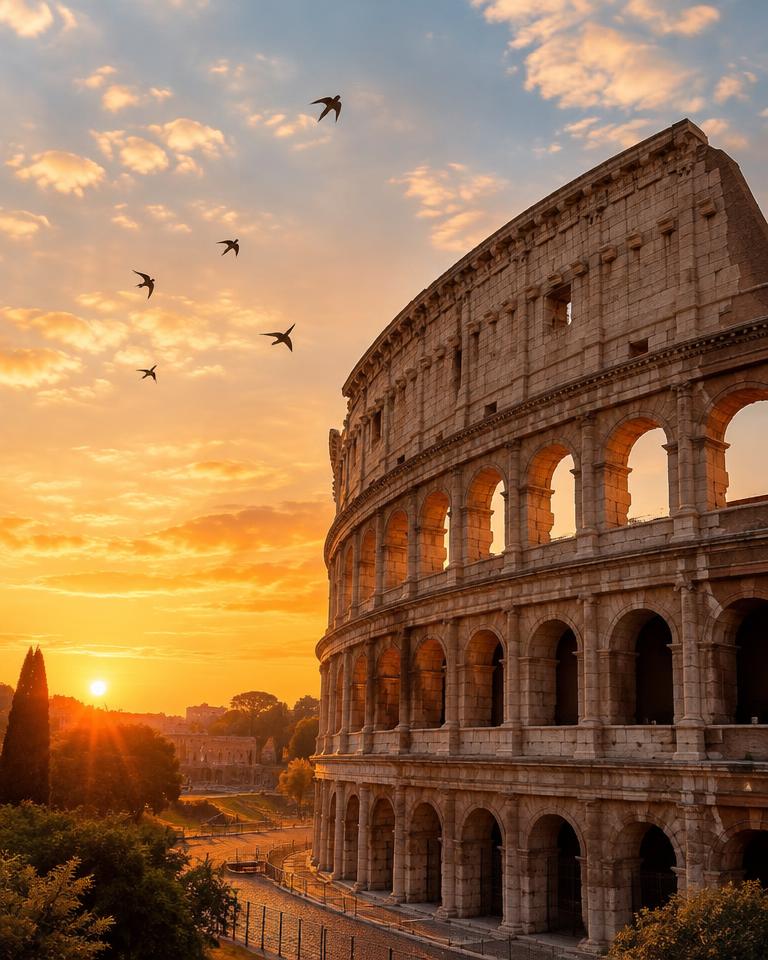
For a summer city trip, assess how much time your preferred sights require outside. Archaeological areas, open squares and queues can add substantial exposure even when part of the visit is indoors. Put the more demanding walking blocks where the forecast and opening arrangements make them sensible, and leave room for a substantial break rather than scheduling continuous sightseeing.
If your main objective is the coast, assess that destination directly. An attractive city temperature does not establish sea conditions, beach services or boat operations. Check accommodation and transport arrangements for the actual dates, especially when your route depends on a seasonal connection. The solution is not necessarily to avoid summer, but to build a summer-shaped itinerary instead of using the same schedule in every season.
5. Autumn: distinguish comfortable sightseeing from guaranteed beach weather
Autumn is another useful period to compare for city walking, particularly if you prefer a trip built around streets, museums and food rather than maximum beach time. Look across successive months and consider shorter daylight alongside temperature and rainfall. A later start after a leisurely breakfast leaves less room for a long outdoor excursion than it would at another time of year.
Avoid treating the word shoulder season as a promise of dry weather, low demand or universal bargains. Events, weekends and local holidays can change the experience, while coastal services may follow their own operating calendar. If swimming or island travel is essential, verify those priorities explicitly. If they are optional, make the city component the reliable anchor and keep weather-dependent additions flexible.
6. Winter cities and mountain holidays are different products
A winter city break can work well when you genuinely want indoor culture, shorter outdoor walks and a slower pace. Check the dated forecast, carry appropriate layers and verify opening arrangements around holidays. Do not assume every attraction follows the same weekly schedule, and do not fill limited daylight with an unrealistic sequence of distant neighborhoods.
A winter mountain holiday needs a separate assessment of terrain, snow conditions, transport, equipment and your experience. The same applies to a summer hiking holiday at elevation: confirm trail status, lift operations and accommodation rather than assuming the calendar settles access. Where specialist judgment is required, use appropriate local professionals. A city-focused climate article can help organize the questions, but it cannot certify a mountain objective as safe or accessible.
7. Compare seasons against the trip's main purpose
The comparison below is an editorial planning framework informed by Italia.it's seasonal overview. It deliberately avoids national weather figures and fixed opening dates. Each row identifies a question to resolve with destination-specific data and current operator information.
If your trip includes both cities and a weather-sensitive outdoor component, let the latter shape the dates and use the cities as adaptable anchors. If the required windows do not align, reduce the route. Trying to combine a major urban circuit, beach holiday and ambitious mountain itinerary can create more compromises than an extra stop is worth.
| Trip focus | What to compare | What to verify separately |
|---|---|---|
| Rome sightseeing | Walking comfort, rainfall and daylight | Attraction access and timed-entry arrangements |
| Milan city break | Urban seasonal patterns and indoor interests | Events, opening days and onward connections |
| Northern lakes | Weather suitable for the chosen shore activities | Boat operations and local transport |
| Coastal or island stay | Conditions for the actual beach or marine activity | Ferries, accommodation and seasonal services |
| Mountain walking | Elevation-specific conditions | Trail, road, lift and refuge status |
| Winter mountain holiday | Local snow and weather conditions | Operating areas, equipment and suitable instruction |
8. Worked example: a city-first trip with a flexible extra
Imagine a trip with Rome and Milan as the fixed anchors. Compare candidate spring or autumn dates on both historical pages, then choose a window that suits your comfort preferences and transport options. Give each city enough nights for a full sightseeing day and some flexibility. Keep transfer day relatively light instead of combining it with the trip's most important admission.
Putting the example into practice
Add one optional excursion only after checking its specific conditions and logistics. From the outset, give that day an alternative in the base city so poor weather does not create a scramble. Confirm actual train services and attraction arrangements through official channels. This is a route-design example, not a recommendation that every first visit must include both cities or a promise about travel times.
9. Book the constrained elements and keep the rest adjustable
Identify the parts of the trip that cannot easily move: international travel, limited-entry sights, seasonal accommodation and any connection that runs infrequently. Book those with a clear understanding of change terms. Leave neighborhood walks, viewpoints and some meals flexible so you retain the ability to respond to the forecast. A calendar full of reservations can be harder to adapt than a slightly less ambitious itinerary.
Pack for the complete route, especially if it combines a city with a lake or higher ground. Bring layers that work together, proven footwear and protection appropriate to the likely exposure. Italia.it's practical information is a useful starting point for broader travel logistics, but current transport, entry and attraction requirements should always be checked with the responsible official provider.
10. Make the final decision at the right time scale
Months ahead, use historical patterns to decide which seasonal window best suits your priorities. Near departure, switch to dated forecasts for each city and to local notices for outdoor areas. Review the most weather-sensitive activity again shortly before doing it. A historical comfort ranking cannot tell you whether a particular boat operates tomorrow or whether a trail is suitable after recent weather.
The best time to visit Italy is therefore not just a month name. It is the point where your route, interests, available services and tolerance for uncertainty fit together. A city-led trip can remain satisfying through a range of conditions; a specialized outdoor holiday needs a narrower and more carefully checked window. Build that distinction into the itinerary before booking, rather than trying to repair it after arrival.
Before you go
- Identify whether cities, coast, lakes or mountains are the priority.
- Compare Rome and Milan data only for those cities.
- Research additional destinations with official local sources.
- Check daylight as well as temperature and rain.
- Confirm seasonal boats, lifts and accommodation where relevant.
- Verify important attraction arrangements directly.
- Keep at least one outdoor day adaptable.
- Pack for the coolest and most exposed part of the route.
- Recheck local conditions before marine or mountain activities.
Frequently asked questions
Is there one best month to visit Italy?
No. The answer changes with the route and activity. Compare city walking comfort separately from swimming, mountain access and seasonal transport.
Are spring and autumn always better than summer?
Not for every trip. They are useful periods to compare for sightseeing, while summer may suit other priorities. Check regional conditions, exposure and operating arrangements rather than choosing by season label alone.
Can Rome's climate chart represent southern Italy?
No. It describes Rome, not every southern city, island or coastal resort. Use destination-specific information for each additional stop.
Should I assume mountain routes are open in spring?
No. Access depends on elevation, snow and local operating decisions. Confirm trails, roads, lifts and accommodation with the appropriate regional authorities and operators.