1. Think in neighborhoods, not a citywide checklist
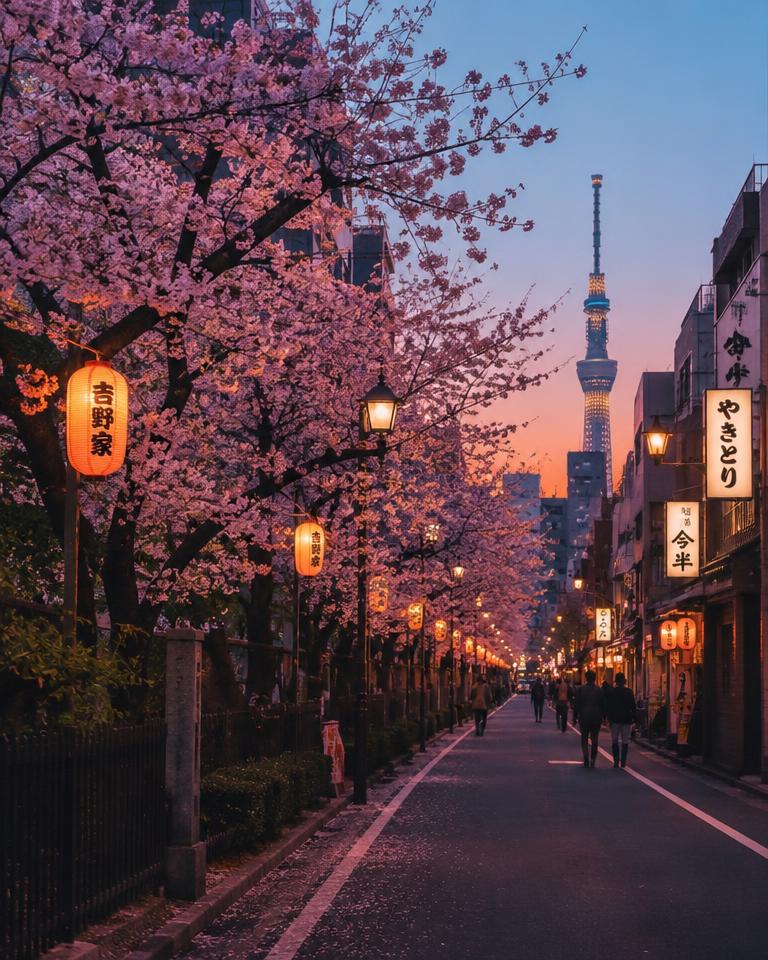
Three days in Tokyo work best when you give each day a geographical identity. The official GO TOKYO itinerary begins with Asakusa and Ueno and highlights the walking appeal of neighborhoods including Harajuku and Shibuya. This guide follows that neighborhood-first logic while leaving more room for personal interests and ordinary travel friction. It is an introduction to selected parts of the city, not an attempt to exhaust its possibilities.
Assume three full sightseeing days, excluding a substantial airport arrival or departure. If your flight schedule leaves less time, remove the flexible third-day addition first. Choose accommodation for a workable transport connection rather than a promise that one district is best for everyone. Before leaving each morning, identify the day’s main area, one essential experience and the point at which you would be happy to stop. That keeps a successful day from becoming an endurance exercise.
2. The three-day route at a glance
The core grouping below draws on GO TOKYO’s official neighborhood itinerary and its recommendations for museums and family activities. The suggested timing is editorial planning, not an attraction timetable. Check current opening arrangements and transport before finalizing the order.
| Day | Main area | Core experience | Easy reduction |
|---|---|---|---|
| 1 | Asakusa and Ueno | Sensoji, surrounding streets and a park or museum | Choose either a longer museum visit or more walking |
| 2 | Harajuku, Omotesando and Shibuya | Street life, architecture and a personal-interest stop | Shorten shopping and omit an extra interior |
| 3 | Interest-led return or Odaiba | Complete a favorite area or visit Miraikan | Remain in one district and finish early |
3. Make transport simple before making it cheap
GO TOKYO identifies JR East services, Tokyo Metro, Toei and other transport options as parts of the city’s network. Its three-day guide recommends a rechargeable IC card such as Pasmo or Suica for convenient station entry and exit. That is a practical starting point, but it does not mean every pass or ticket covers every service you might use. Check coverage rather than assuming all urban rail is one system.
For this itinerary, prioritize a route you understand. Save your accommodation address, the nearest useful station and the day’s first destination offline. When comparing a pass, list the journeys you actually expect to make and verify their eligibility. Do not buy an extensive travel product simply because Tokyo’s network looks complicated. A little preparation at the start of the day can be more valuable than repeatedly changing the route to maximize a pass you did not need.
4. Day one morning: Asakusa and Sensoji
Begin in Asakusa with the Sensoji temple complex. GO TOKYO describes the approach through Kaminarimon, the Thunder Gate, and along Nakamise-dori, the shopping avenue leading toward the temple. Treat the approach as part of the visit rather than a corridor to rush through. Give yourself time for the surrounding streets, while remembering that a religious site is not simply a photographic backdrop. Follow posted guidance about access and behavior.
The official guide also recommends the top floor of the Asakusa Culture Tourist Information Center for views. Check current access before making it a fixed appointment. After the main visit, stop for a meal or a genuine rest instead of immediately adding a distant attraction. Your first morning is also an opportunity to learn your own pace in the city. If you are tired from travel, a fuller Asakusa visit can be more satisfying than completing every item on the draft.
5. Day one afternoon: choose your version of Ueno
Continue toward Ueno for a different kind of afternoon. GO TOKYO highlights Ueno Park and, for travelers interested in indoor activities, the National Museum of Nature and Science. Its official activity guide describes exhibits covering subjects including space, dinosaurs and Japan’s ecosystem. This gives families and science-minded visitors a specific option rather than a vague instruction to find something indoors. Confirm opening days, admissions and any exhibition arrangements directly before visiting.
Choose the park, the museum or a measured combination according to your energy and the weather. Do not regard a long museum visit as an extra that fits automatically after several hours on foot. If you prefer outdoor wandering, keep the afternoon less structured and leave room for a rest. End the day in a place convenient for returning to your accommodation; there is no need to cross the city again merely to make the evening sound more comprehensive.
6. Day two morning: Harajuku and Omotesando
Give the second day to the western neighborhood cluster around Harajuku, Omotesando and Shibuya. GO TOKYO’s three-day guide highlights Harajuku’s fashion culture, the Ota Memorial Museum of Art as an alternative to crowded streets, and the architectural interest of Omotesando and its surroundings. These are different ways to spend the same morning, not obligations to combine into one uninterrupted march. Choose the branch that matches your interests.
For an architecture-led visit, pay attention to the streetscape and allow time simply to look. For a museum-led visit, check the current exhibition and access arrangements before going. For shopping, decide what kind of browsing you enjoy rather than treating every store as an attraction. Put a meal break into the route before your energy drops. The practical advantage of this day is its thematic coherence: you can experience contrasting urban styles without adding a separate cross-city destination.
7. Day two afternoon: give Shibuya more than a photograph
Move on to Shibuya with enough time to explore rather than arriving only to collect a recognizable view. The official three-day guide includes Shibuya among its core neighborhoods and suggests Hands for travelers interested in DIY and craft products. Use that as an example of a personal-interest stop, not a mandatory shopping assignment. A good afternoon can center on design, everyday retail, street observation or simply a relaxed meal.
If you want a particular ticketed experience, verify its current arrangements separately and make it the afternoon’s anchor. Do not assume it can be inserted between everything else without affecting the schedule. Otherwise, keep the final part of the day open. Travelers with different interests can agree on a meeting place and a manageable amount of independent browsing. End when the day has delivered what you wanted, rather than adding another district because the transport network makes it technically possible.
8. Day three: choose depth, science or a slower return
The third day is deliberately less prescriptive. Return to the neighborhood that most interested you, complete a museum visit you postponed, or choose Odaiba for Miraikan, the National Museum of Emerging Science and Innovation. GO TOKYO describes Miraikan as a place exploring scientific knowledge and technology, including subjects such as robotics. Verify the museum’s current program and admissions before organizing the day around a particular exhibit.
Choose one of these approaches rather than combining all of them. A return visit is not wasted time: it can turn a hurried introduction into a more memorable experience. If the first two days were tiring, use the third for a shorter walk, one meaningful interior visit and an unhurried meal. If weather has disrupted the original sequence, this day can absorb the most important unfinished experience. Its flexibility is a deliberate feature of the itinerary, not a gap that needs filling.
9. Worked example: adapting the plan for a rainy second day
Suppose the forecast makes the original Harajuku-to-Shibuya walking day unattractive. First check whether any fixed reservations prevent exchanging days two and three. If not, move the museum-centered day forward and retain the western neighborhood day for the better opportunity. If a reservation cannot move, shorten the surrounding walk instead of trying to preserve the entire original plan. This keeps the important experience while reducing unnecessary exposure and transit.
Putting the example into practice
For a family choosing the National Museum of Nature and Science, check its opening arrangements before leaving, then build the rest of the day around that visit. For travelers choosing Miraikan, verify the journey and program first. Neither option guarantees that all weather disruption disappears; it simply gives the day a coherent indoor center. Keep meals nearby and avoid booking another distant attraction as compensation. The best adaptation usually removes complexity rather than adding new commitments to rescue the old schedule.
10. Final preparation for three satisfying days
Tokyo’s official transport guide notes that central sightseeing generally does not require a rental car. For this route, use public transport and walking, choosing individual tickets, an IC card or a suitable pass after checking coverage. Confirm the airport journey separately from the sightseeing network; the best choice depends on your actual airport, accommodation and departure time. Do not treat the three-day table as an airport-transfer plan.
Before each day, make a short rather than exhaustive plan: first stop, principal experience, meal area and return route. Save current attraction information and leave space for the city itself. Three days become more rewarding when you stop measuring success by the number of neighborhoods crossed. A temple approach, an engaging museum and time to understand a favorite street can form a complete introduction without pretending to summarize all of Tokyo.
Before you go
- Confirm that you have three usable sightseeing days.
- Check current opening days for every chosen museum.
- Save accommodation and station details offline.
- Compare transport products against actual journeys.
- Keep neighborhood days exchangeable where reservations allow.
- Choose one main experience per half-day.
- Plan the airport journey separately.
- Remove optional stops when fatigue or weather changes the day.
Frequently asked questions
Is three days enough for Tokyo?
Three full days can provide a rewarding introduction, but not a comprehensive visit. This itinerary concentrates on selected neighborhoods rather than trying to cover the whole city.
Should I buy a rail pass?
Not automatically. Tokyo has JR trains, subway networks and other services. Compare the coverage and cost of a pass with your actual route; an IC card or individual tickets may be simpler.
Can I follow this itinerary with rainy weather?
Yes, with adjustments. Shorten exposed walks, choose a museum or another suitable indoor visit, and keep neighborhood days exchangeable around fixed reservations.
Does this plan include arrival and departure days?
No. It assumes three usable sightseeing days. If flights consume part of that time, remove an optional neighborhood rather than compressing the full route.